
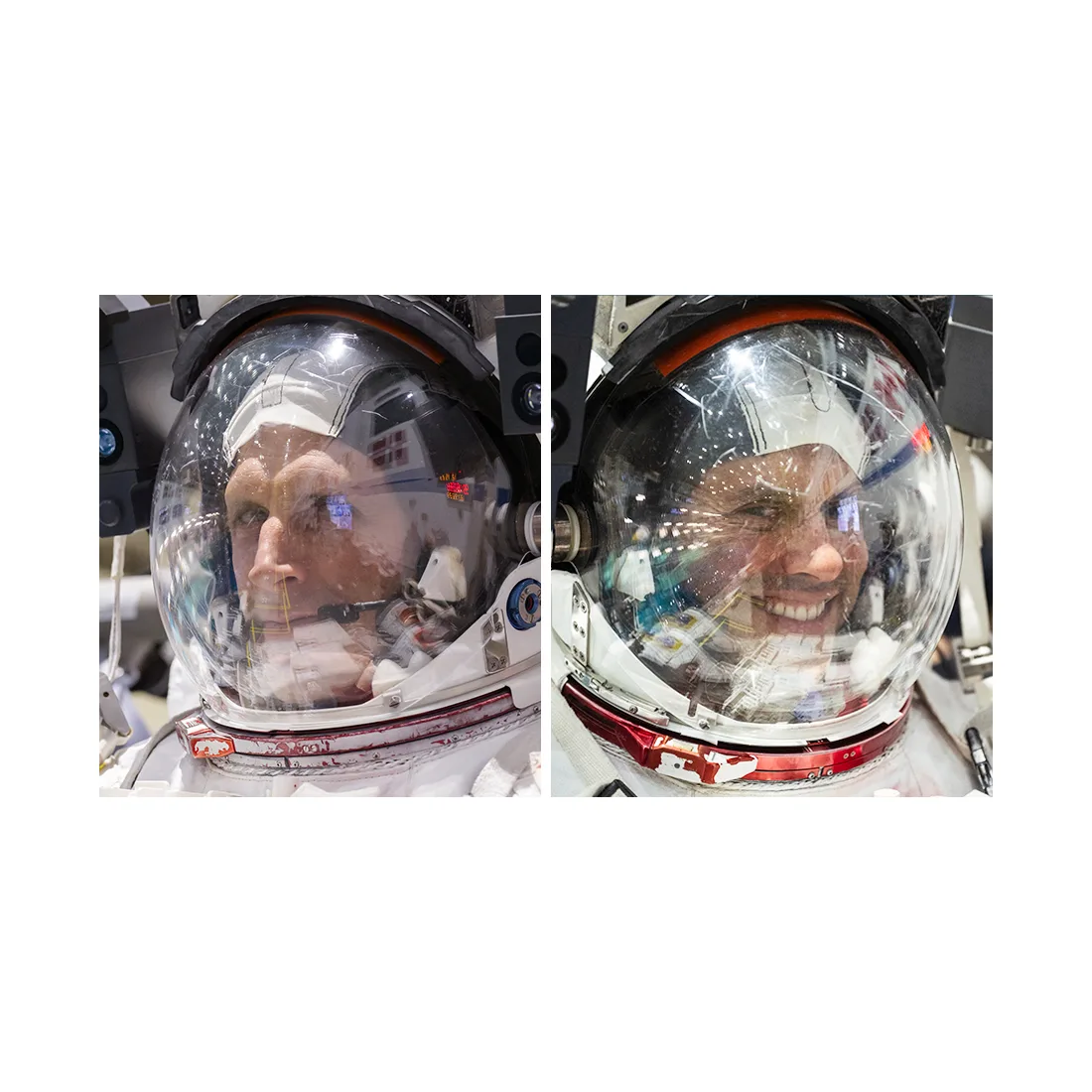
HOUSTON, TX, Nov. 5, 2026 — Canadian Space Agency astronaut Joshua Kutryk and NASA astronaut Anil Menon began a spacewalk at 8:36 a.m. EST Thursday to install and deploy the International Space Station's eighth and final International Space Station Roll-Out Solar Array, NASA said in a space station blog post by Mark A. Garcia.
The array is going on the 3B channel of the station's power system, "completing the power augmentation upgrades," NASA wrote. Kutryk is spacewalk crew member 1 in the suit with red stripes; Menon is crew member 2 in the unmarked suit. Live coverage is on NASA Live and partner streams.
What "final" means for station power
Mission managers cleared the spacewalk Wednesday, NASA said in a Nov. 4 blog. Kutryk and Menon were scheduled to spend about seven hours outside installing the roll-out array on the far end of the starboard truss. NASA said the job "will complete the augmentation of the space station's power generating capacity from 160 kilowatts to about 215 kilowatts that began in June 2021."
That is roughly a 30% boost over the pre-upgrade generating capacity, a figure Space.com also cited from NASA. The new flexible arrays unfurl like a roll of tape and supplement the station's original rigid solar wings, which have degraded after a quarter-century in orbit.
A repeat of last week's choreography — on the other side
Kutryk and Menon installed the seventh iROSA on Oct. 29. Thursday's plan mostly repeats those tasks on the opposite side of the truss, NASA said. Kutryk translates to the starboard truss to meet Menon, who carries the array while attached to Canadarm2. Menon hands the array to Kutryk, detaches from the arm, and joins him at the worksite; Kutryk then hands the array back so both can finish the install.
The Oct. 29 outing was the 100th U.S. spacewalk from the ISS and the first EVA by a Canadian astronaut since 2019, Space.com reported. Thursday's walk is U.S. EVA-101 on NASA's count for the complex.
Who else is aboard
Menon and Kutryk share the station with NASA's Luke Delaney and Jessica Watkins and Roscosmos cosmonauts Pyotr Dubrov, Anna Kikina and Sergey Teteryatnikov, Space.com noted. Delaney, Kutryk, Teteryatnikov and Watkins arrived Oct. 1 on SpaceX Crew-13; Dubrov, Kikina and Menon arrived in mid-July on a Soyuz.
Wednesday, the spacewalkers staged tools and suits in the Quest airlock, reviewed procedures, and joined Watkins and Delaney for Canadarm2 training before a readiness conference with Mission Control, NASA said. The crew also kept up microbiology work — water-sample checks, surface swabs and antibiotic-resistance sampling — while cosmonauts handled light duty and radiation-detector prep for the suits.
Florida's stake
Kennedy Space Center and Florida's contractor workforce built and launched many of the hardware pieces that keep the station powered, including prior iROSA deliveries. More station power supports research, life support and future commercial module demand. Launchpad covered the seventh-array spacewalk and the Nov. 5 target date in earlier Science & Technology briefs; Thursday's exit from the airlock starts the last chapter of that upgrade.
NASA had not posted a completion blog by Launchpad's Midday Brief deadline. A seven-hour timeline from an 8:36 a.m. start puts the planned end near mid-afternoon Eastern. Launchpad will note the outcome when NASA confirms the array is installed and generating.
Watch NASA Live for the rest of the walk — and treat "about 215 kilowatts" as NASA's stated target for the completed set, not a Launchpad measurement.
Sources: NASA space station blog, Nov. 5, 2026 (Garcia); NASA blog, Nov. 4, 2026; Space.com (Mike Wall).
← More Science & Technology stories · All Launchpad stories · Spotted an error? Request a correction.