
AHIPARA, New Zealand, Oct. 28, 2026 —
A horse rider on New Zealand's Ninety Mile Beach noticed some unusual plants, took photos, recorded the GPS location and reported them, leading to the removal of 141 invasive sea spurge plants, according to New Zealand's Department of Conservation (DOC).
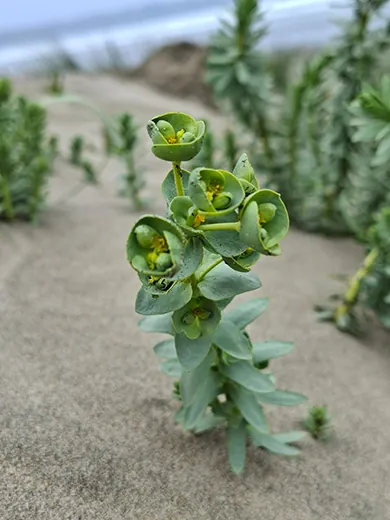
The plants were near Lone Pine, north of Ahipara. DOC says the rider remembered information they had seen about sea spurge and stopped to document it.
"One person noticed something that didn't look quite right, and took the time to report it. That simple action led us to an infestation that might otherwise have gone unnoticed," said DOC Sea Spurge Ranger James Gardner.
What crews found
DOC says a team from Biosecurity New Zealand, DOC, the Northland Regional Council and local ecology experts was on site the next day. They found and removed 5 mature plants, 14 young plants and 122 seedlings. The patch was tucked into a moving sand drift that had almost buried some plants, which DOC says may explain why earlier surveys missed it.
Sea spurge is native to Europe and likely drifted to New Zealand on ocean currents from Australia, but it is not yet established there, DOC says. Because seeds can survive in sand for several years, crews will keep monitoring the site.
Tips from DOC
DOC asks anyone who thinks they've spotted sea spurge to take photos and note the location, and not to touch it, because its milky sap can irritate skin and eyes.
"The person who reported this find did everything right," Gardner said. "We'd love more people to do the same."
Those are the facts, directly from the source.
Source: New Zealand Department of Conservation media release, Oct. 27, 2026 (local time).
← More World stories · All Launchpad stories · Spotted an error? Request a correction.